WHAT IS PLANETARY HEALTH?

Air Pollution

Humanity’s impact on Earth’s natural systems is affecting the quality of the air we breathe.

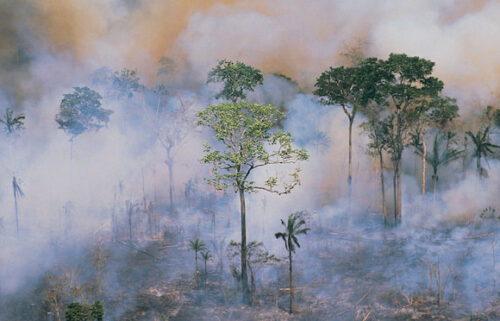
Air pollution is attributed to natural sources like dust storms, and human activities like vehicle emissions, industrial processes, burning wood, and power plants. Inhaled particulate matter (e.g., PM2.5) can penetrate deep into the lungs, causing respiratory issues, heart disease, and other health problems, especially for vulnerable populations. Biomass burning for agriculture in places like equatorial Asia is driving sharp increases in particulate air pollution and associated morbidity and mortality. In some regions, air pollution has become so pervasive that it obscures the sun, altering regional weather patterns, reducing agricultural yields, and accelerating glacial melting.  

In addition to particulate pollution, warmer temperatures associated with climate change increase the formation of tropospheric ozone, a main constituent of smog and contributor to cardiorespiratory disease. Warmer temperatures and higher atmospheric carbon dioxide concentrations are associated with longer pollen seasons and increased pollen production, intensifying allergic respiratory diseases, such as asthma. 

8M Deaths per year

One modelling study concluded that fine particulate and ozone air pollution contribute to more than 8 million all-cause deaths per year.

Air-pollution deaths are substantially more likely in low- and middle-income countries.

Browse the resources below to learn more about air quality and ways to protect the air we breathe.

 “… pollution control is highly cost-effective and, because pollution, climate change, and biodiversity loss are closely linked, actions taken to control pollution have a high potential to also mitigate the effects of those other planetary threats.”

– Lelieveld et al. Pollution and health: A progress update

Air Pollution Resources

Tip: Use quotation marks while searching for your term (e.g., "climate change") to find exact terms.

Close

Filter by:

Resource Type
Planetary Boundaries
Health Impacts
Sectors
Interventions
Perspectives
Regions
Year

253 Results

Not finding what you’re looking for?

Newest First

Filters

Acute particulate matter exposure diminishes executive cognitive functioning after four hours regardless of inhalation pathway. Nature Communications.
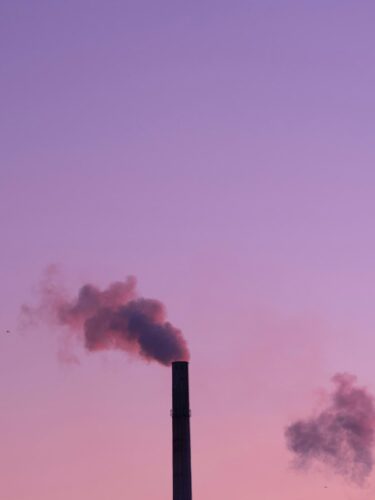
Partial view of a smoke stack against a purple and pink sunset.

Air Pollution

Acute particulate matter exposure diminishes executive cognitive functioning after four hours regardless of inhalation pathway. Nature Communications.

T. Faherty et al. (February 2025) examined the effects of short-term particulate matter (PM) air pollution exposure on brain function by exposing participants to either high PM concentrations or clean air for one hour, with and without restricted nasal inhalation. Cognitive tests conducted before and after exposure showed significant declines in selective attention and emotion expression recognition following PM exposure, while working memory and cognitive speed remained unaffected. The findings suggest that PM pollution primarily impairs cognitive function through lung-brain pathways rather than olfactory mechanisms.

• Research & Reports
Faherty, T., Raymond, J.E., McFiggans, G., et al.

National and provincial burden of disease attributable to fine particulate matter air pollution in China, 1990–2021: An analysis of data from the Global Burden of Disease Study 2021. The Lancet Planetary Health.

Air Pollution

National and provincial burden of disease attributable to fine particulate matter air pollution in China, 1990–2021: An analysis of data from the Global Burden of Disease Study 2021. The Lancet Planetary Health.

• Research & Reports

Yu, T., Jiang, Y., Chen, R., et al.

Environmental challenges in Southern Brazil: Impacts of pollution and extreme weather events on biodiversity and human health. International Journal of Environmental Research and Public Health.

Air Pollution Biodiversity Loss

Environmental challenges in Southern Brazil: Impacts of pollution and extreme weather events on biodiversity and human health. International Journal of Environmental Research and Public Health.

• Research & Reports

Ellwanger, J.H., Ziliotto, M., Kulmann-Leal, B., et al.

The impacts of air pollution on mortality and hospital readmission among Medicare beneficiaries with Alzheimer’s Disease and Alzheimer’s Disease-related dementias: A national retrospective cohort study in the USA. The Lancet Planetary Health.

Noncommunicable Diseases Air Pollution

The impacts of air pollution on mortality and hospital readmission among Medicare beneficiaries with Alzheimer’s Disease and Alzheimer’s Disease-related dementias: A national retrospective cohort study in the USA. The Lancet Planetary Health.

• Research & Reports

Dong, S., Braun, D., Wu, X., et al.


News Related to Air Pollution

See More