
Direct Injuries Displacement and Conflict
Drought exposure and the risk of sexual, emotional, and physical violence against adolescents in Zimbabwe, Mozambique, and Lesotho: an observational study. The Lancet Planetary Health.
• Research & Reports
WHAT IS PLANETARY HEALTH?
The Earth crisis is significantly leading to a range of socio-political and humanitarian crises.
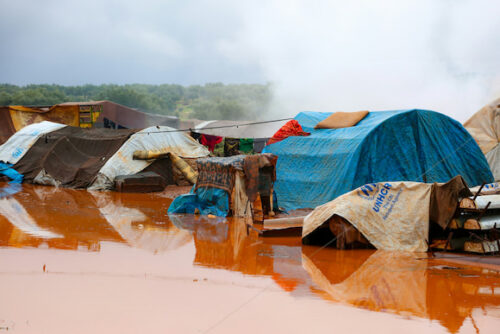
Environmental degradation–such as desertification, deforestation, and rising sea levels–forces millions to leave their homes, contributing to a growing population of climate refugees and internally displaced persons. By mid-2025, the number of people displaced by war, violence, and persecution stood at over 117 million. Around 75% of them, or 86 million, are exposed to high-extreme hazards. Many of the world’s largest refugee settlement areas are located in areas that experience harsher weather conditions than those typically found in their host countries.
250M internal displacements caused by weather-related disasters over the past decade – equivalent to over 67,000 displacements per day.
Rising sea levels threaten the existence of small island states, while water shortages and agricultural collapse in arid areas contribute to increased migration. These movements, within and across borders, often place immense pressure on resources in destination regions, leading to competition for essentials such as food, water, and land, which can escalate into conflicts over resources and civil unrest .
A recent UNHCR report highlights that individuals fleeing war, violence, and persecution are increasingly vulnerable to the global climate crisis and other forms of environmental degradation. These overlapping challenges place them in a precarious position, facing compounded threats while lacking adequate funding and resources for adaptation.
17 Countries The International Rescue Committee has identified as enduring brutal conflicts while being on the front lines of a global climate crisis they did not create.
Displacement caused by environmental crises and conflict is strongly associated with increased risks of infectious disease outbreaks, malnutrition, and both physical and mental trauma. Overcrowded and unsanitary conditions in displacement camps, coupled with limited access to healthcare and clean water, create ideal conditions for the spread of diseases such as cholera and respiratory infections. Malnutrition often becomes more severe among displaced populations due to disrupted food systems and insufficient aid supplies. Addressing these challenges requires urgent global collaboration and evidence-based policies to mitigate the profound human toll of forced displacement.
Direct Injuries Displacement and Conflict
• Research & Reports
Displacement and Conflict Noncommunicable Diseases
• Guides & Frameworks, Tools
Displacement and Conflict Climate Change
• Research & Reports
Displacement and Conflict Infectious Diseases
• Case Studies
Displacement and Conflict Life Stage and Reproductive Health
• News
