
Essay
Greening Health Care from the Ground Up: Thailand’s Local Model for Planetary Health
Thailand is addressing pressing Planetary Health challenges by embedding sustainability into everyday health care. A recent visit to Saraburi Province by the ASEAN Institute for Health Development, Mahidol University shows how national policies translate into practical, low-cost actions that reduce environmental impacts while strengthening community health.



Thailand faces pressing Planetary Health challenges
As one of the world’s most vulnerable regions to climate-related hazards, Thailand is currently witnessing extreme heat, erratic rainfall, and increased flooding that directly contributes to heat-related illnesses and the spread of vector-borne diseases (Robinson et al. 2025). At the same time, hospitals and clinics themselves consume energy, generate waste, and use materials at scale. This paradox of health systems, both protecting and impacting health through environmental pressures, is central to why sustainable health care matters here.
Planetary Health is often discussed in global terms – climate change, biodiversity loss, and food insecurity. Yet its solutions are built locally, shaped by everyday decisions in communities. This is why observing health care delivery on the ground is so important. A recent visit to Saraburi Province (Figure 1) by PHA member ASEAN Institute for Health Development, Mahidol University showed how environmental responsibility is already embedded in routine health care practice in Thailand.
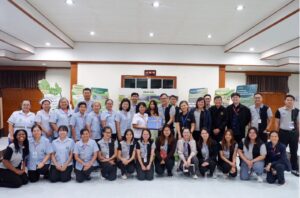
The visit, carried out with students from the Master of Primary Health Care Management and PhD in Health and Sustainable Development programs, focused on how health services interact with their surrounding environments. In provincial and community health facilities, students looked beyond clinical care to examine waste handling, sanitation, energy use, and facility conditions. These observations extended beyond patient encounters, highlighting how routine operational decisions shape both public health and environmental outcomes. We observed waste segregation and sanitation protocols, energy use considerations, water management, and how spaces are maintained and organized. These routine operational choices directly influence both health outcomes and environmental impacts across the region. By strictly segregating infectious waste from general and organic waste, the hospital minimized the “chain of transmission” where waste acts as a breeding ground for insects and rodents that spread disease (Thailand Ministry of Public Health 2016).
A seamless translation of national policy into practice
Thailand’s GREEN & CLEAN Hospital policy treats environmental management as a core component of quality care within public health facilities. This approach complements Thailand’s low-carbon hospital initiative, focusing on waste management, water treatment, and reducing energy use to tackle climate change (Robinson et al. 2025; Thailand Ministry of Public Health 2016). Rather than treating sustainability as an optional goal, these frameworks integrate environmental stewardship into the structure of health service delivery (Sudhipongpracha et al. 2023).
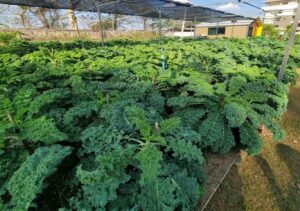
At Muak Lek Hospital, this integration becomes tangible. Organic farming on hospital grounds provides fresh produce while modeling healthy, plant-forward diets. Kale cultivation onsite (Figure 2) is linked with basic composting of food waste, closing small but meaningful loops between consumption and production. Nutrition and sustainability are not treated as separate issues; they are integrated into everyday operations.
These visible, low-cost practices influence patients, staff, visitors, and local communities. They demonstrate that food choices, waste management, and energy use can support both personal health and environmental stewardship. Health facilities become not only places of treatment but also living spaces for learning and behavior change.
Thailand’s example illustrates an important lesson for Planetary Health: systemic change does not only occur through high-level commitments. It happens when national policy empowers local institutions to act. Small local hospitals, when supported by enabling frameworks, can create meaningful community impact by greening both agricultural practices and health services.
More information
About the Author
References
Robinson, Sophie Tawatsupa, Benjawan, Barnes, Michelle, Hoetker, Glenn, Maijarernsri, Preyanit, and Bowen, Kathryn J. 2025. “Building Climate Resilient Healthcare Systems: Lessons from Thailand,” Health Policy and Planning 40 (9): 1008–16. https://doi.org/10.1093/heapol/czaf051.
Thailand Ministry of Public Health, Department of Health. Success Stories of GREEN and CLEAN Hospital Practice in Thailand. Nonthaburi, 2016. https://env.anamai.moph.go.th/web-upload/migrated/files/env/n1548_7137f2e6268190d82470687ec31a02cf_book52.pdf.
Sudhipongpracha, Tatchalerm, United Nations Population Fund, and FHI 360. 2023. Green Viability and Climate Vulnerability Assessments in Healthcare-Related Facilities in Thailand. Bangkok: UNFPA Thailand. https://thailand.unfpa.org/sites/default/files/pub-pdf/gva_cva_assessment_report_2023.pdf.