




Explore Planetary Health

Research & Resources

Browse or search our curated collection of research articles, tools, videos, and other Planetary Health resources. Featuring approximately 2,000 research articles and additional tools spanning a variety of thematic areas, our library has information on Planetary Health for every audience — whether you’re exploring the field for the first time, an educator hoping to engage Planetary Health in your classroom, a seasoned scientific researcher, or someone looking to making a difference in your community and in the world. New resources are added every month.

Contact us to suggest items to add to our library and sign up for our newsletter to receive updates on the latest additions.

All Resources

Tip: Use quotation marks while searching for your term (e.g., "climate change") to find exact terms.

Close

Filter by:

Resource Type

Earth Systems Changes:

Environmental Changes
Planetary Boundaries
Health Impacts
Sectors
Interventions
Perspectives
Regions
Year

267 Results

Not finding what you’re looking for?

Newest First

Filters

Environmental modulators of vascular physiology and inflammation. Experimental Physiology.

Noncommunicable Diseases Air Pollution

Environmental modulators of vascular physiology and inflammation. Experimental Physiology.

The review examines how environmental factors, particularly pollutants and natural compounds, influence vascular physiology, inflammation, and the development of atherosclerosis (the build up of fats and cholesterol in artery walls) and cardiovascular disease.

• Research & Reports
Seneviratne, A.N., Majumdar, A., Surendranath, K., et al.

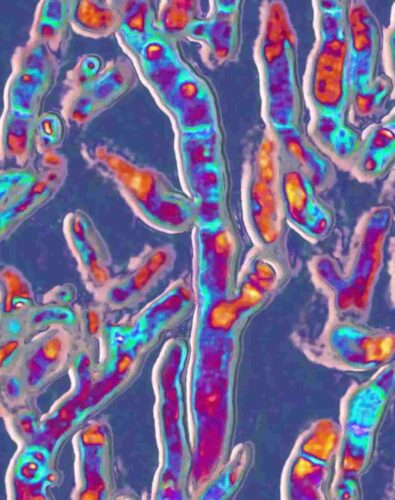
Killer fungi to spread as climate heats up. Financial Times.
The Aspergillus fumigatus pathogen seen under a microscope. © BSIP/Universal Images Group/Getty Images

Infectious Diseases Noncommunicable Diseases

Killer fungi to spread as climate heats up. Financial Times.

Climate change is accelerating the global spread of the deadly fungus Aspergillus, which infects millions of people annually. Rising temperatures could expose millions more to infections, especially the immunocompromised, threatening human health and food security.

• News

Peel, M.

Association Between Heatwave Exposure and Rapid Kidney Function Decline: A Longitudinal Cohort Study from CHARLS. BMC Public Health.
Person holding cigarette and smoking. Smoke coming out.

Noncommunicable Diseases Climate Change

Association Between Heatwave Exposure and Rapid Kidney Function Decline: A Longitudinal Cohort Study from CHARLS. BMC Public Health.

This study finds that prolonged heatwave exposure significantly increases the risk of rapid kidney function decline in older adults in China, with urban residents, men, and those who smoke or drink especially vulnerable.

• Research & Reports

Zhang, J., Wang, B., Ye B., et al.

Estimating the urban heat-related mortality burden due to greenness: a global modelling study. The Lancet Planetary Health.

Noncommunicable Diseases Climate Change

Estimating the urban heat-related mortality burden due to greenness: a global modelling study. The Lancet Planetary Health.

This study aimed to estimate the effects of increased greenness in urban areas on heat-related deaths. Modeling suggests that preserving and expanding greenness is a potential solution to lower ambient temperatures and reduce the health impacts of heat exposure.

• Research & Reports

Wu, Y., Wen, B., Ye, T., et al.