
Climate Change Health and Care Systems
Nationwide evaluation of health workers knowledge and awareness of climate change health related hazards. Discover Public Health.
• Research & Reports
WHAT IS PLANETARY HEALTH?
Increasing atmospheric concentrations of greenhouse gases, driven by human activity, negatively impacts global ecological systems and human health.
Human-driven emissions of carbon dioxide, methane, nitrous oxide, and black carbon are primarily responsible for an unstable and changing climate, and most are produced by burning fossil fuels and altering natural habitats. Glacial melting, rising sea levels, increased global temperatures, more frequent extreme weather events, and changes in the abundance, distribution, and composition of species are all linked to the changing climate.
Globally, nearly twice as many natural disasters occurred between 2000 and 2019 and affected roughly 1 billion more people than the period spanning 1980 and 1999. Heat waves, droughts, fires, floods, tropical storms, and other extreme weather events pose both near- and long-term threats to human health and intergenerational equity. For example, particulate matter from fires reduces air quality and causes morbidity and mortality from cardiorespiratory disease; flooding leads to biological contamination of water supplies, displacement, injury, and trauma; and more intense coastal storms, combined with sea level rise and loss of coastal barrier systems (mangrove forests, vegetated dunes, coral reefs, and wetlands), generate a “triple threat” for inhabitants of low-lying coastal areas. Survivors of extreme weather events face long-term, serious physical and mental health impacts.

Climate change and ecosystem transformations are inextricably connected and often mutually exacerbated.
The field of Planetary Health uses a systems approach to connect the complexities of anthropogenic drivers of climate change to natural hazards. Understanding these relationships in terms of cause-and-effect is the first step in addressing climate change and its widespread effects on the planet’s ecosystems and well-being of its inhabitants.
We must take note of these causal relationships and advocate for living within planetary boundaries to preserve what climate stability we can for the safety of future generations and our biosphere.
Climate Change Health and Care Systems
• Research & Reports

Climate Change Health and Care Systems
Climate change threatens human health and could cost $1.5 trillion in lost productivity by 2050, making health a core business resilience priority.
• Research & Reports
Infectious Diseases Climate Change
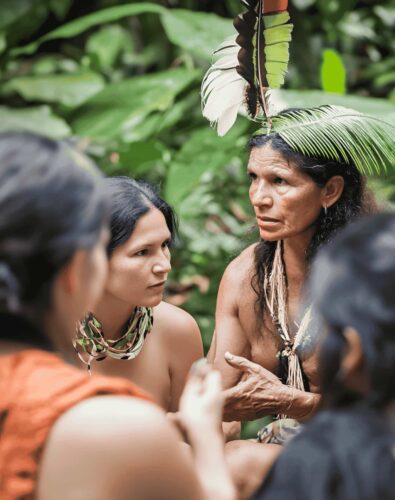
Researchers analyzed 20 years of data across the Amazon to assess how Indigenous Territories, their legal recognition, and surrounding landscapes influence fire-related and zoonotic/vector-borne diseases. Findings reveal that Indigenous Territories can reduce fire-related disease incidence and, depending on forest cover and fragmentation, help mitigate or amplify zoonotic/vector-borne disease risks.
• Research & Reports
Climate Change Built Environment and Urbanization
High temperatures may be associated with increased risk of anxiety and depression outcomes in the Barcelona Metropolitan Area.
• Research & Reports

Nutritional Diseases Climate Change
The study links rising temperatures to higher added sugar consumption, mainly from sweetened beverages and frozen desserts. Vulnerable groups face greater increases, with nationwide intake projected to rise significantly under climate change, stressing urgent health adaptations.
• Research & Reports
