
WHAT IS PLANETARY HEALTH?

Climate Change

Increasing atmospheric concentrations of greenhouse gases, driven by human activity, negatively impacts global ecological systems and human health.

Human-driven emissions of carbon dioxide, methane, nitrous oxide, and black carbon are primarily responsible for an unstable and changing climate, and most are produced by burning fossil fuels and altering natural habitats. Glacial melting, rising sea levels, increased global temperatures, more frequent extreme weather events, and changes in the abundance, distribution, and composition of species are all linked to the changing climate.  

Globally, nearly twice as many natural disasters occurred between 2000 and 2019 and affected roughly 1 billion more people than the period spanning 1980 and 1999. Heat waves, droughts, fires, floods, tropical storms, and other extreme weather events pose both near- and long-term threats to human health and intergenerational equity. For example, particulate matter from fires reduces air quality and causes morbidity and mortality from cardiorespiratory disease; flooding leads to biological contamination of water supplies, displacement, injury, and trauma; and more intense coastal storms, combined with sea level rise and loss of coastal barrier systems (mangrove forests, vegetated dunes, coral reefs, and wetlands), generate a “triple threat” for inhabitants of low-lying coastal areas. Survivors of extreme weather events face long-term, serious physical and mental health impacts.

Climate change and ecosystem transformations are inextricably connected and often mutually exacerbated.

The field of Planetary Health uses a systems approach to connect the complexities of anthropogenic drivers of climate change to natural hazards. Understanding these relationships in terms of cause-and-effect is the first step in addressing climate change and its widespread effects on the planet’s ecosystems and well-being of its inhabitants. 

We must take note of these causal relationships and advocate for living within planetary boundaries to preserve what climate stability we can for the safety of future generations and our biosphere.

Climate Change Resources

Tip: Use quotation marks while searching for your term (e.g., "climate change") to find exact terms.

Close

Filter by:

Resource Type
Planetary Boundaries
Health Impacts
Sectors
Interventions
Perspectives
Regions
Year

920 Results

Not finding what you’re looking for?

Newest First

Filters

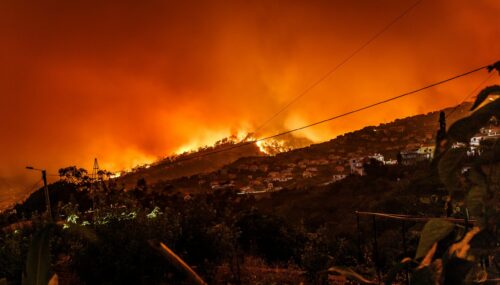
Heatwaves and wildfires highlight urgency of action on extreme heat
Burning ridge behind buildings at nighttime

Climate Change Health and Care Systems

Heatwaves and wildfires highlight urgency of action on extreme heat

Extreme heat with dangerously high temperatures is affecting many countries globally, highlighting the urgent need for early warnings and heat-health action plans.

• News

World Meteorological Organization

Identifying the climate sensitivity of infectious diseases: a conceptual framework. The Lancet Planetary Health.
This illustration provided a 3D graphical representation of a number of Rotavirus virions, set against a black background.

Infectious Diseases Climate Change

Identifying the climate sensitivity of infectious diseases: a conceptual framework. The Lancet Planetary Health.

Climate change may intensify climate-sensitive infectious diseases, which vary by seasonality, geography, and climate-linked variation. Understanding pathogen, vector, and host responses can inform early warning systems and strengthen health system resilience and adaptation.

• Guides & Frameworks

Alcayna, T., Rao, V.B., and Lowe, R.

Identifying the impact and critical windows of extreme temperatures on the risk of gestational diabetes mellitus in twin pregnancies. Journal of Endocrinological Investigation.
Woman holding her belly on grass land

Life Stage and Reproductive Health Noncommunicable Diseases

Identifying the impact and critical windows of extreme temperatures on the risk of gestational diabetes mellitus in twin pregnancies. Journal of Endocrinological Investigation.

Analyzing 3,769 twin pregnancies, this study links extreme heat and cold exposure to increased gestational diabetes risk. Critical windows of susceptibility were identified, underscoring the need to consider temperature extremes in maternal health strategies.

• Research & Reports

Pan, Y.R., Tang, W.Z., Xu, W.Z., et al.

Severe flooding and cause-specific hospitalisation among older adults in the USA: a retrospective matched cohort analysis. The Lancet Planetary Health.
A man walks by a mailbox next to a white car in a suburban driveway. The clear sky and trees are reflected in a large puddle on the street.

Noncommunicable Diseases Climate Change

Severe flooding and cause-specific hospitalisation among older adults in the USA: a retrospective matched cohort analysis. The Lancet Planetary Health.

This large-scale study examined over 4.5 million hospital records from adults over 65 in the U.S. and found that severe flooding was linked to higher hospitalization rates for skin, nervous system, and musculoskeletal diseases, and injuries.

• Research & Reports

Aggarwal, S., Hu, J.K., Sullivan, J.A., et al.


News Related to Climate Change

See More