Where are the veterinarians in Planetary Health conversations?
In a conversation with Dr. Rohini Roopnarine, she shares new research on Planetary Health education at St. George’s University, finding that faculty and students across health disciplines are eager to collaborate yet remain siloed by institutional structures and curricula.
The question isn't whether future doctors and vets need Planetary Health education. It's whether we can still afford to educate them separately.
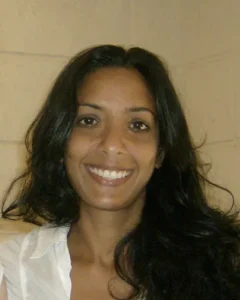
Dr. Rohini Roopnarine
Professor Emeritus at St. George's University (SGU) in Grenada, West Indies
Dr. Rohini Roopnarine has spent a career at the crossroads of animal and human health. Now she’s researching why the professions that need to work together on Planetary Health challenges are being trained in silos—and what it would take to change that. We spoke with her about a January 2026 study conducted at St. George’s University in Grenada on faculty and student perspectives on Planetary Health education, what she’s learned about building bridges across health disciplines, and where she hopes interprofessional education is headed next.
You started your career in small-animal medicine and surgery. How did a vet become a Planetary Health advocate?
Vets are on the frontlines of Planetary Health — we often see the warning signs first, at the interface of animal, human, and ecosystem health. Animals act as the “canary in the coal mine” for diseases that eventually affect humans (zoonoses). Warming oceans, for instance, fuel harmful algal blooms whose toxins are a leading cause of sea otter deaths. Similarly, arboviruses like West Nile virus often show up in mosquitoes, birds, and animals before they reach humans (Paternoster et al., 2017).
Yet the connections don’t always get made on either side: medical students are strong climate advocates but often miss the animal-health link, while vets — despite deep training in comparative medicine — often miss the environmental-health link.
That gap became obvious to me during COVID. Even as conversations turned to zoonotic origins, it was physicians and biologists speaking to the media — not vets. I kept asking: where are we in these conversations about emerging zoonotic diseases and planetary change? We weren’t speaking up when our voices needed to be heard.
You conducted a study at St. George’s University in Grenada on faculty and student perspectives on building bridges between departments for better climate change education. What was the inspiration behind this study?
The inspiration grew from G7 countries finally recognizing One Health after the we identified the wild animal origins behind the COVID-19 pandemic. Around that time, Planetary Health was emerging as an aligned narrative focused on tackling human-caused changes to our Earth system.
I also started to recognize the ways that my profession was contributing to the planetary crisis through highly carbon-intensive healthcare practices – including our role in farming and livestock. I saw my colleagues all speaking about the same concepts under different names: One Health, Eco Health, Planetary Health. We need to align those narratives and disciplines. So in January 2026, with a team of my colleagues, I sought to understand how faculty and students across the health disciplines at St George’s campus (Medicine, Veterinary Medicine, public health, Biology, Marine Ecology), perceive Planetary Health education.
What does Planetary Health in practice look like for veterinary and medical students?
Planetary Health conversations need to make their way into the clinic – what do we tell a client about disposing of unused medications? About those medications leaching into landfill waste that pollutes our groundwater supply? About how tick and flea preventives, agricultural fertilizers, and livestock waste from clinically treated animals enter our groundwater supply and oceans. These are everyday clinical conversations, yet we are not teaching our students how to have them. If Planetary Health content isn’t on board exams, students are very clear they don’t want to learn it.
Your participation numbers are striking. What do they tell us?
We invited 1,000+ students to our focus groups; only 17 participated — mostly North American veterinarians with prior undergraduate coursework in environmental health. That narrow response itself is telling: engagement was highest among those already primed to see the connections. On the faculty side, engagement was stronger: from 500+ invited, 63 registered interest and about 50 participated, spanning medical and veterinary schools across a wide range of countries (Spain, Argentina, USA, Italy, Czechoslovakia, India, Canada, Iran, Lebanon, the West Indies) and disciplines.
The biggest finding: faculty didn’t know what other departments — even within their own school — were doing on Planetary Health. They were eager to connect once given the chance. This points to a structural gap. Our MPH program offers the most comprehensive One Health content — practicums and capstones on disaster response, waste management, and policy. Pre-med/Pre-Vet students get exposure too, through case studies on urban farming and climate impacts on ocean life. But MD and DVM students who haven’t gone through the MPH or Pre-med/Pre-Vet track miss these connections entirely.
We can’t expect students to collaborate across disciplines if faculty aren’t modeling that collaboration ourselves. Campus conversations about a “green campus” are underway, but that hasn’t yet translated into curricula.
What would a strong interprofessional curriculum look like?
Our MD and DVM students recommended we start early. Introduce One Health and Planetary Health in the first year of the MD and DVM, in the pre-vet and pre-med programs, from an interprofessional perspective. This could mean an introductory course, an elective, or content spiraled through the existing curriculum.
Build these modules with faculty from across programs, co-designed with interested students so Planetary Health education is recognized as core to practice, not an add-on. Global case competitions, bringing in experts and forcing cross-campus collaboration, are another strong lever.
Framing matters too. The Planetary Health Report Card is a fantastic tool because it puts students in the driver’s seat and motivates faculty and administration to build Planetary Health competencies into the curriculum, though it requires administrative support.
Along with my MD and DVM colleagues from Penn, Minnesota, Wisconsin, UF and Colorado, we drew on the Global Consortium on Climate Health Education competencies to shape interprofessional curricula spanning One Health and climate domains (see more here).
What’s your hope for interprofessional education in the next five years?
My hope is that interprofessional education becomes mandatory — not something we opt into, but the norm. Accreditation is the real goal, because that’s what makes it stick rather than stay optional. But that requires MD and DVM administrators who recognize how urgent the climate crisis is for patient health.
Climate change doesn’t respect professional boundaries, so why do we still train future health professionals in silos? It’s already reshaping the conditions health professionals work in — yet graduates can still leave school without the tools to make those connections. The question isn’t whether future doctors and vets need Planetary Health education. It’s whether we can still afford to educate them separately.
But underneath the policy talk, it’s simpler than that. Nature does so much for us — imagine a world with no plants, no animals, no trees. The question I keep coming back to is: what can we do together so that people and nature thrive together?
You can read Dr. Roopnarine’s latest journal article on the importance of interprofessional education here.
More Information
Dr. Rohini Roopnarine
Dr. Rohini Roopnarine Dr. Rohini R. Roopnarine, is Professor Emeritus at St. George’s University (SGU) in Grenada, West Indies. She began her career in small-animal medicine and surgery, training at the University of Liverpool and completed a rotating small animal internship at the University of Glasgow, Scotland, School of Veterinary Medicine before practicing as a veterinarian in Wales (UK) and then returning home to Trinidad.
She holds an M.Phil in Veterinary Public Health from the University of the West Indies and an EdD in Higher Education from the University of Liverpool, where her doctoral research examined the factors shaping Interprofessional Education (IPE) and One Health training for medical (MD), veterinary (DVM), and dual degree Master of Public Health (MPH), MD MPH and DVM MPH students. She is a core member of the World Veterinary Environmental Alliance (WVEA), Senior Fellow at the International Institute of Geopsychiatry (Bern, Switzerland) and a Fellow of the Royal Society of Public Health (FRSPH). She is also a One Health consultant for the medicinal chemists group at the European Cooperative on Science and Technology (COST), that focus on the development of biodegradable medical and veterinary drugs.




 Your participation numbers are striking. What do they tell us?