
Community Spotlight
Small Shifts in What We Eat Can Reduce Costs, Transform Health, and Regenerate Our Planet
Physicians Association for Nutrition (PAN International) has developed Action Briefs and clinical resources to help frontline healthcare providers guide their patients toward choices that are good for themselves and the planet.



Each year, poor diets account for an estimated 24% of deaths globally, while livestock production contributes up to 18% of greenhouse gas emissions, including 34% of methane worldwide. Meanwhile, a deepening cost-of-living crisis means more than 30% of the world’s population cannot afford a healthy diet.
What if eating differently could change all of this? Lower grocery bills, reduced risk of cancer and heart disease, a lighter footprint on the planet — that’s the promise of the Planetary Health Diet (PHD), a flexible, plant-forward framework designed to nourish an estimated 10 billion people by 2050 without exceeding Earth’s ecological limits.
Turning that promise into reality requires coordinated action. PHA Member Organization Physicians Association for Nutrition (PAN International) has developed Action Briefs and clinical resources to help frontline healthcare providers guide their patients toward choices that are good for themselves and the planet.
A New Flexible Framework for Planetary Health Eating
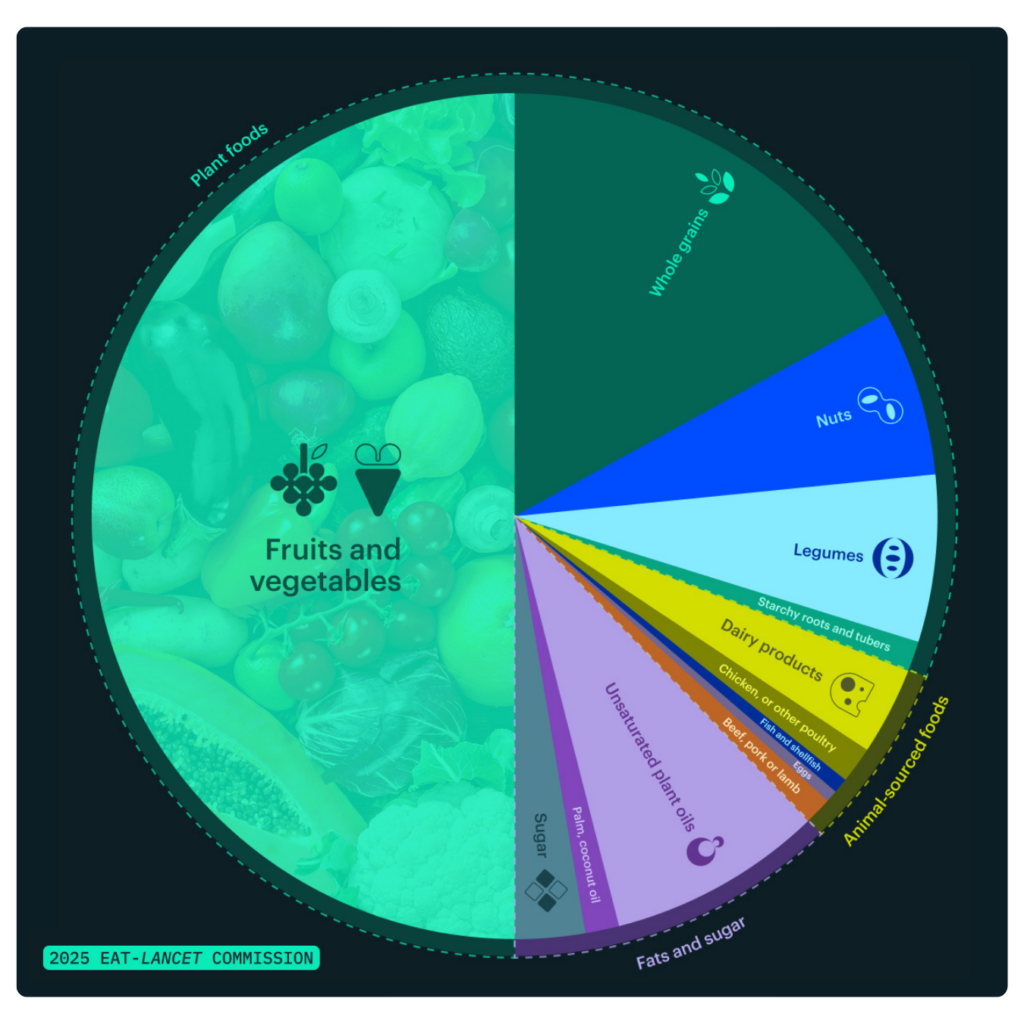
Developed from the 2019 landmark EAT-Lancet Commission report and championed by researchers at Harvard T.H. Chan School of Public Health, the PHD offers an approach that accounts for differences in cultural preferences, nutritional needs, and local food systems. Centered on whole plant foods, the framework emphasizes modest consumption of meat and dairy products.
People who follow this eating pattern have a lower risk of major causes of premature death, including cancer, heart, and lung disease, while widespread adoption can lead to substantial reductions in greenhouse gas emissions, fertilizer needs, and cropland use.
Lowering Food Costs While Eating Your Favorite Dishes
While more than a third of the world cannot afford a healthy diet, research finds that a plant-heavy diet can cost considerably less, especially in regions where animal products are expensive. A study from Iran found that adhering to the PHD reduced grocery costs by 21%, while in the United States a similar diet was shown to cut costs by 19% or $650 per year.
Crucially, the PHD isn’t a rigid prescription. It offers a flexible framework adaptable to cultural preferences, nutritional needs, and local food systems — meaning a Vietnamese pho, a plate of ugali and sukuma, or a Greek gigantes plaki can all fit within its principles. More recipes are outlined in Sunway Centre for Planetary Health’s Planet Saving Meals cookbook.
Treating Patients with the Planetary Health Diet
Equipped with the knowledge on the potential of the Planetary Health Diet, PAN International is accelerating the shift to healthy, sustainable diets across the health sector.
Last year, PAN convened dialogues with more than 70 health organisations through the Healthcare Professionals Community for Action, culminating in practical resources to support the health sector in turning research into practice:
- Action Brief: a practical roadmap to translate global nutrition and sustainability goals into real-world outcomes.
- PHD factsheet: a ready-made tool for clinicians covering diet recommendations, health and environmental benefits, nutrient considerations, and steps for integrating sustainable dietary guidance into patient care.
- PANCO: a global hub for health professionals with additional webinars and resources.
Visit the PHD webpage for comprehensive materials to equip public health professionals and clinicians with the tools to support their patients living longer, healthier lives on a regenerative planet.