News
When the Air We Breathe Makes Us Sick – Even Without a Diagnosis
New data from 32 countries reveals the hidden respiratory toll of air pollution.


Air pollution is one of the greatest Planetary Health challenges worldwide. The World Health Organization estimates that 99% of the world’s population breathes air that exceeds safe levels, and exposure to particulate matter (PM2.5, particles small enough to penetrate deep into the lungs) is linked to 8 million premature deaths each year. But the full toll may be far greater than official statistics capture.
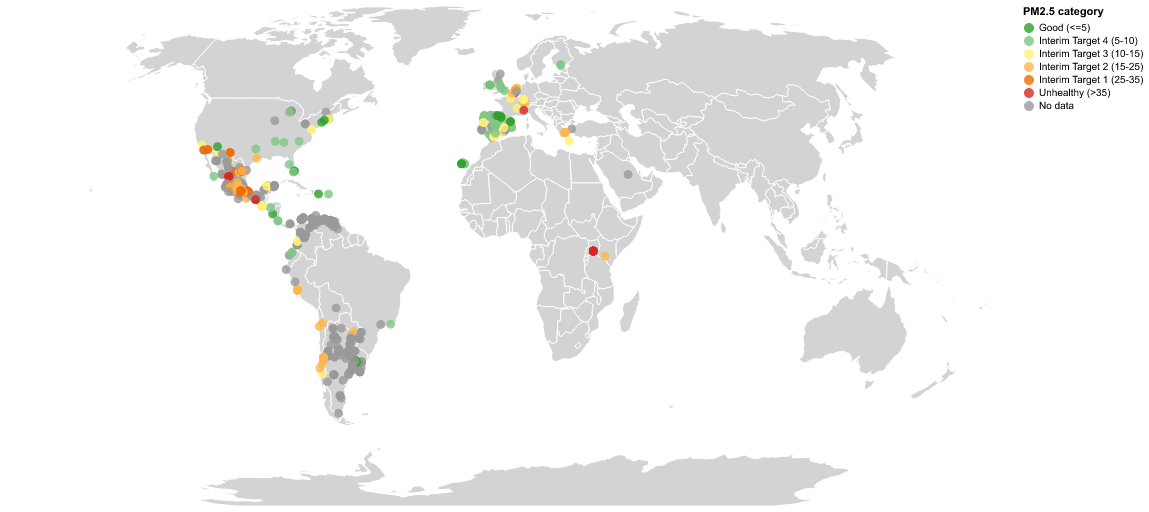
The LovexAir Foundation’s CheckAir Initiative is helping close that gap. Drawing on 1,586 citizen health profiles across 32 countries, it is one of the first large-scale efforts to link people’s real-world symptoms directly to OpenAQ air quality data in their community.
What they found challenges how we understand and quantify who suffers from polluted air.
Stress and Anxiety Are Making It Harder to Breathe
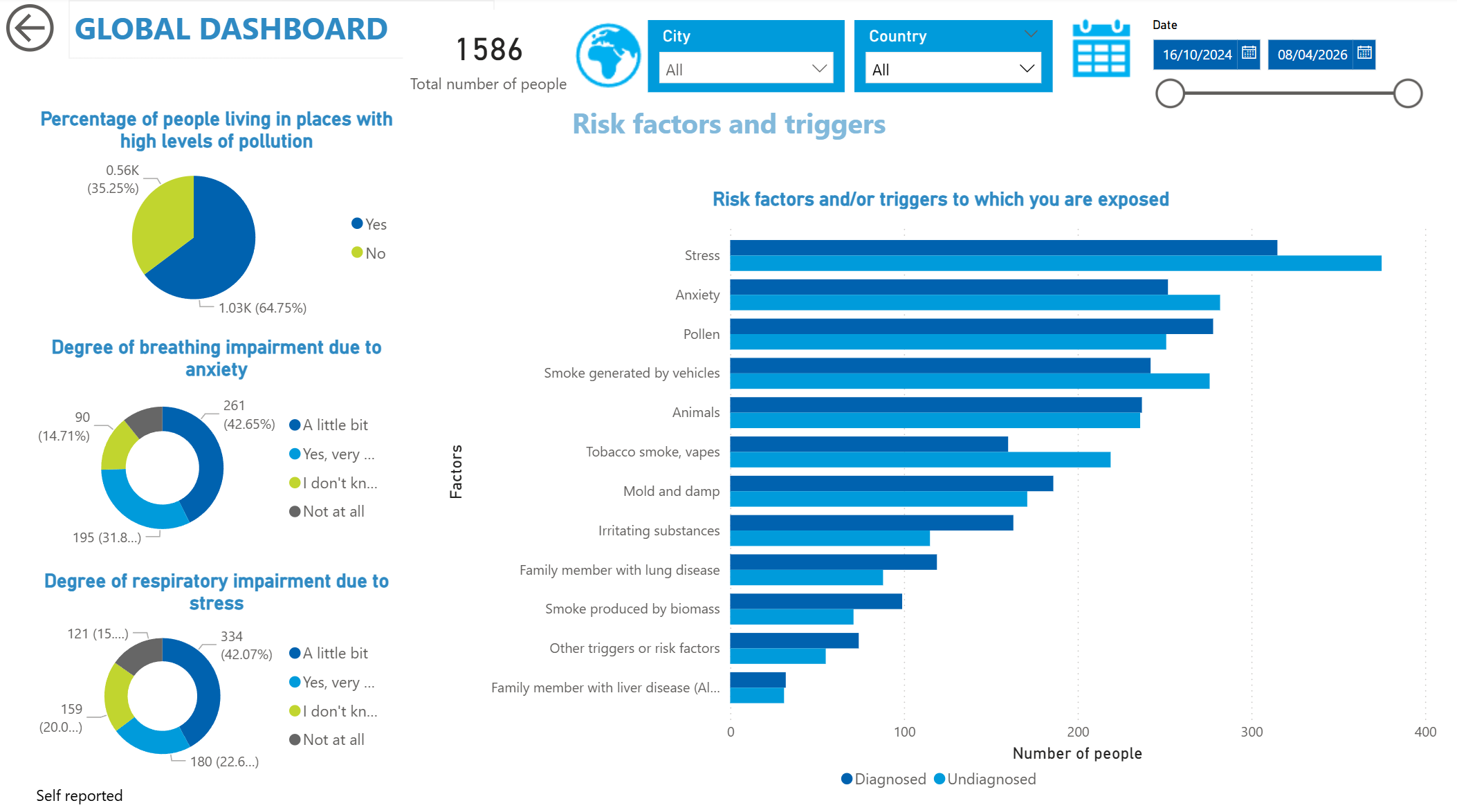
When CheckAir asked participants to identify their key health risks, stress and anxiety ranked first and second – above smoking, physical activity, and occupational exposure. Among the 39% of respondents who reported anxiety, 74% also reported breathing impairment. Among the 50% who reported stress, 65% reported breathing impairment.
These findings are consistent with growing evidence that PM2.5 exposure does not just damage lungs; it also drives mental health deterioration, which in turn worsens respiratory function.
Many People Suffer Without a Formal Diagnosis
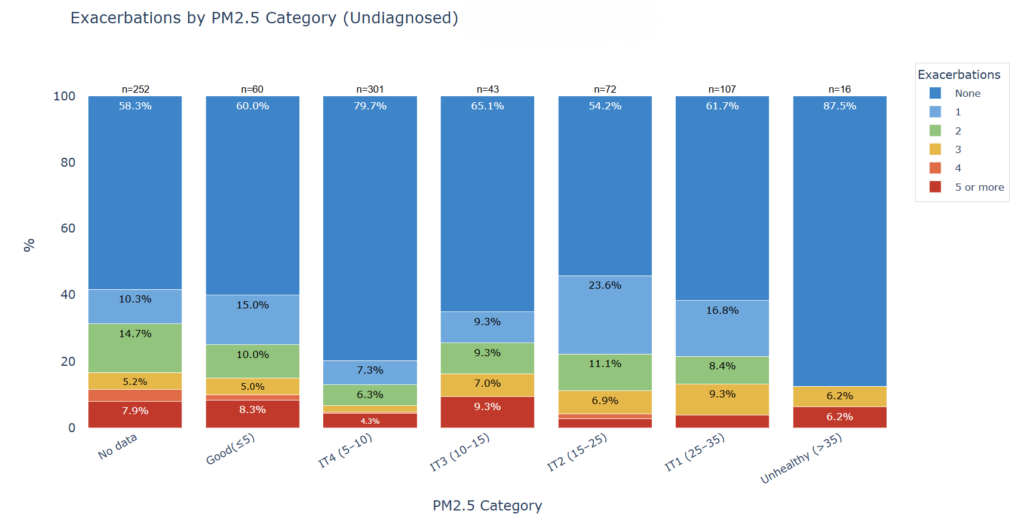
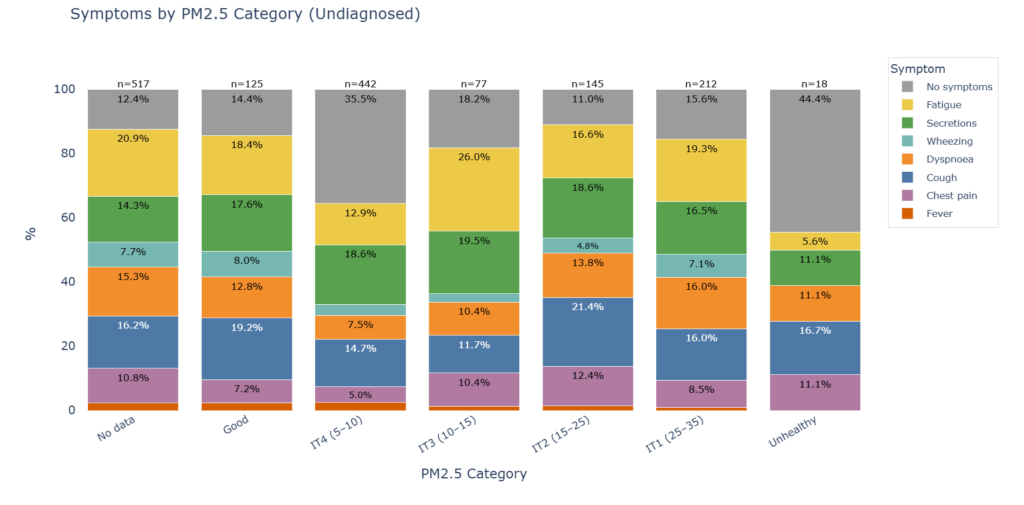
Using WHO interim targets (IT1-IT4) as benchmarks, CheckAir cross-referenced each participant’s health profile with official air quality data for their location. The benchmarks are graduated thresholds that reflect a realistic range of pollution levels across the world, with “unhealthy” representing the highest category, followed by IT1-IT4 (in descending order for pollution levels), progressing towards “good.”
Of the 1,586 participants, 54% had no formal diagnosis of a respiratory condition. Yet the data tell a different story. Among the undiagnosed participants, 33% reported at least one exacerbation – meaning a sudden worsening of symptoms severe enough to disrupt daily life, often requiring medical attention. Fatigue, cough, and shortness of breath (clinically known as dyspnoea) were common across this group.
This points to a hidden population: people who are symptomatic, struggling, and largely invisible to conventional health surveillance because they live without a formal diagnosis.
Worse Air Quality, Worse Symptoms
Even among undiagnosed participants living in areas with relatively “good” air quality, the majority still reported symptoms. As air quality worsens, the burden generally does as well: cough peaked at 21.4% in areas with moderate-to-high pollution, fatigue reached 26% in intermediate pollution zones, and shortness of breath climbed with exposure.
The share of undiagnosed participants reporting no symptoms at all remained low across nearly every pollution category. Dirtier air does not create the problem; it amplifies a burden already quietly present.
Why This Matters
CheckAir demonstrates that waiting for a clinical diagnosis before intervening means we are already too late for millions of people. Citizen-generated data, integrated with open environmental monitoring, can surface these hidden burdens and drive proactive, equitable health policy our planet urgently needs.
Read the full story from Lovexair Foundation.
________________________________________________
About the author
Lovexair Foundation is a non-for-profit organization committed to advancing Planetary Health by addressing the links between environmental exposures, air quality, climate impacts, and human wellbeing through digital innovation and collaborative action. Our initiatives, such as the HappyAir Ecosystem and CheckAir tool, integrate environmental awareness with health promotion to build more resilient communities across the world. Lovexair aims to accelerate collective action for a healthier, more sustainable future.
Lovexair Foundation acknowledges the contributions of Eva Maroto, Besan Abusalah, Mustafa Abusalah, Andrea Gonzales, Shane Fitch and Leonor Pérez to this article.
About the Author