WHAT IS PLANETARY HEALTH?

Chemical Pollution

Human-generated chemical pollution threatens global health, ecosystem balance, and humanity’s long-term survival.

Chemically active materials are discharged into the environment in massive quantities each year, including the introduction of newly synthesized chemicals. Human exposure to chemicals increases with the growth of chemical-intensive industries, including construction, agriculture, electronics, cosmetics, mining, and textiles. We come in contact with chemicals through the air we breathe, the water we drink, and the food we eat. Industrial chemicals have been detected in populations of all ages across the globe and in plants and animals worldwide.   

The presence of hazardous chemicals and other pollutants (e.g., microplastics and pharmaceutical pollutants) impacts human health,  biodiversity, and ecological integrity. Chemical pollutants have been tied to a broad range of health concerns, including cancers and respiratory illnesses; and diseases of the cardiovascular, central nervous, and renal systems. Recent studies have also focused on the impacts of exposure over time to low levels of pollutants on human reproduction, cognitive health, and food security.  
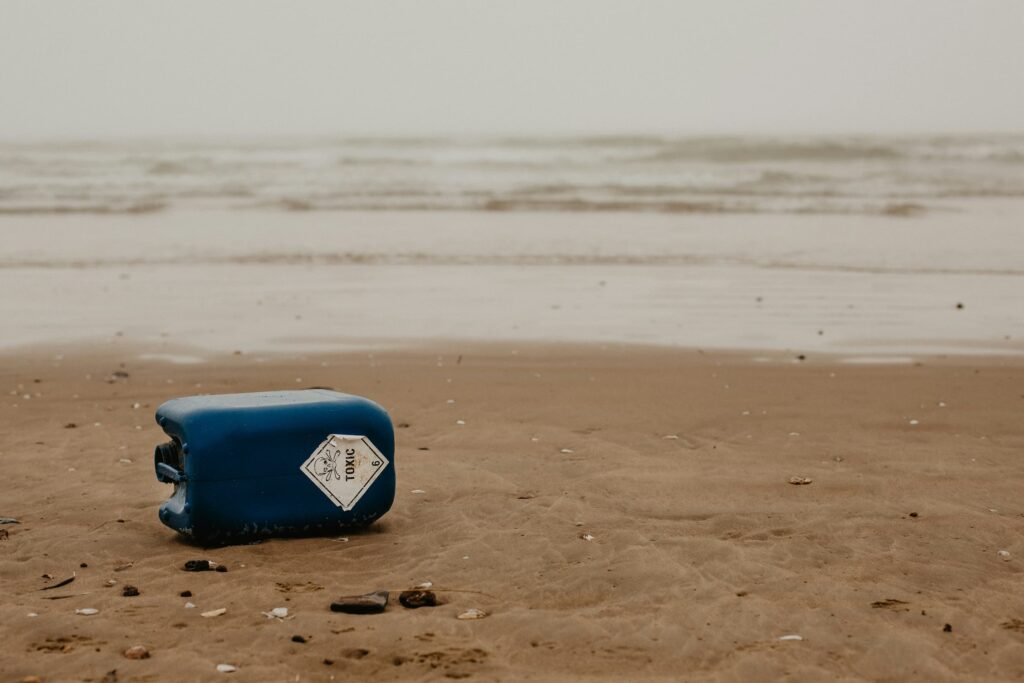
Empty plastic carton sits on the sand next to a dirty ocean shore.

“We cannot live without chemicals. Nor can we live with the consequences of their bad management.” -Joyce Msuya, Acting Executive Director, UN Environment

Chemical Pollution Resources

Tip: Use quotation marks while searching for your term (e.g., "climate change") to find exact terms.

Close

Filter by:

Resource Type
Planetary Boundaries
Health Impacts
Sectors
Interventions
Perspectives
Regions
Year

156 Results

Not finding what you’re looking for?

Newest First

Filters

The Lancet Countdown on health and plastics. The Lancet.
A crumpled, glossy fabric with a world map design in blue and peach hues lies on a peach background, creating a soft, artistic, tranquil tone.

Noncommunicable Diseases Chemical Pollution

The Lancet Countdown on health and plastics. The Lancet.

This report introduces a new global monitoring system to track how plastic production, pollution, and exposure affect human and environmental health. It aims to inform policies that reduce harm worldwide.

• Research & Reports

Landrigan, P.J., Dunlop, S., Treskova, M., et al.

Environmental toxicants in the Hispanic community epigenetically contributing to preeclampsia. Cardiovascular Toxicology.
White plastic bottle on brown soil

Life Stage and Reproductive Health Noncommunicable Diseases

Environmental toxicants in the Hispanic community epigenetically contributing to preeclampsia. Cardiovascular Toxicology.

This review shows that Hispanic women’s higher exposure to pollutants like air pollution, heavy metals, and plastics may raise the risk of serious pregnancy complications, contributing to racial disparities in maternal health.

• Research & Reports

Gladwell, L.R., Packer, L., Karthik, J., et al.

Can microplastics spread killer bacteria? One World. One Health.
A transparent capsule spills pastel heart-shaped pills onto a bright blue surface, with some pills mid-air and others scattered around the capsule.

Infectious Diseases Chemical Pollution

Can microplastics spread killer bacteria? One World. One Health.

Plastic pollution and drug-resistant bacteria are teaming up. In this podcast, BU researcher Neila Gross explains how microplastics help superbugs thrive and what that could mean for human health and global antimicrobial resistance.

• Podcasts

Scientists in Japan develop plastic that dissolves in seawater within hours. Reuters.
A slightly crumpled blue plastic bottle lies on a rocky shoreline covered with brown seaweed, highlighting environmental pollution by the ocean.

Chemical Pollution Ocean / Marine Degradation

Scientists in Japan develop plastic that dissolves in seawater within hours. Reuters.

Japanese scientists created a strong, non-toxic plastic that dissolves in seawater within hours and leaves no microplastics behind. The material could help reduce ocean pollution but is not yet commercialized.

• News

Wang, I.

Short-term effects of chemical and noise pollution during heat and cold waves on emergency hospital admissions in Madrid. International Journal of Biometeorology.
Airplane flying high in a clear blue sky, framed by the silhouettes of leafy trees.

Direct Injuries Chemical Pollution

Short-term effects of chemical and noise pollution during heat and cold waves on emergency hospital admissions in Madrid. International Journal of Biometeorology.

This study examined how chemical air pollution and noise affect emergency hospital admissions in Madrid during hot and cold months. It found that both pollutants, especially noise, significantly impact vulnerable groups like children and older adults.

• Research & Reports

Ruiz-Páez, R., López-Bueno, J.A., Díaz, J., et al.


News Related to Chemical Pollution

See More