Essay
Planetary Health is Fundamental to Children’s Health in Africa
Across Africa, the climate crisis is flooding homes, spreading diseases, failing harvests, and threatening food security for millions. Planetary Health Campus Ambassador Mariam Kasali explores how children’s health depends on Planetary Health.


The Author leading a climate literacy workshop in her community (Ajegunle), Lagos, Nigeria. Credit- Lady Titi Photos
A Childhood Shaped by Climate Change
My childhood friend did not have the language to name what was happening to him. Somewhere right now, another child does not either. That silence ends when all of us – researchers, educators, policy makers and global health platforms choose to put African children at the center of the climate conversation.
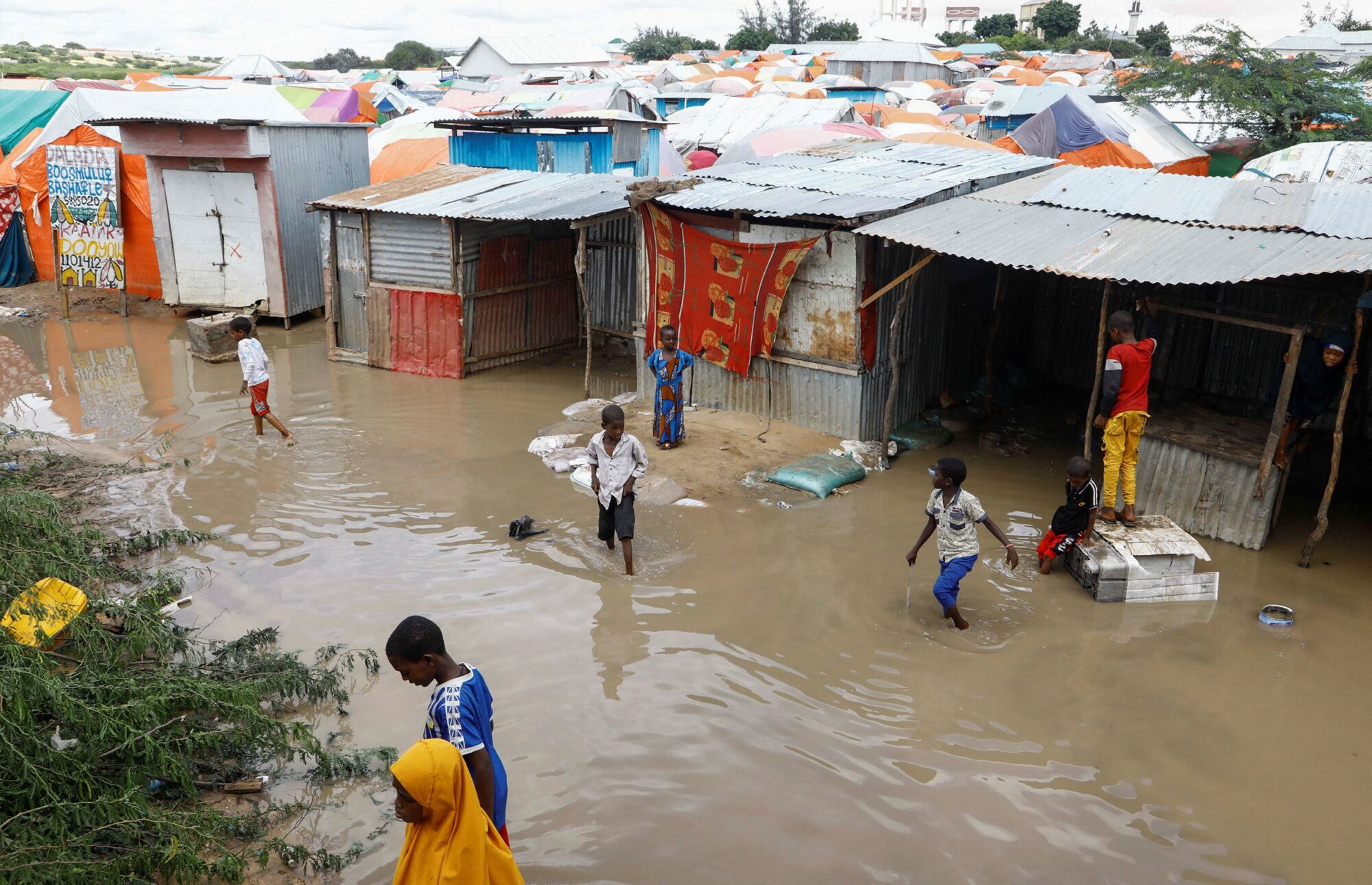
Growing up along the coast, I watched floodwaters swallow our neighbors’ homes overnight. No warning, no time to prepare. Families waded out with whatever they could carry — a mattress, a cooking pot, a child on each hip. In the days that followed, children got sick with fever, diarrhea, rashes we had no names for. Parents carried them to clinics through flooded streets. I did not understand any of it. I only knew my childhood friend was no more.
Years later, studying environmental health, I finally found the numbers that named what I had lived. WHO AFRO reported that in 2022, 56% of public health emergencies in Africa were caused by climate-related disasters. ¹ In 2023, UNICEF found that 98% of children across African countries face high or extremely high risk from climate change impacts.² That is when the dots started connecting, and it made me wonder: if African children are the most vulnerable, why are they still absent from conversations about Planetary Health?
The Most Exposed, The Least Protected
Children are not small adults. Their immune systems are still developing, their breathing rates are higher, their bodies absorb more heat relative to their size. When climate strikes, they fall first, and in Africa, the climate is striking from every direction.
Floods bring cholera, typhoid, and diarrheal diseases that drain small bodies faster than they can recover. Droughts drive malnutrition, 13 million children across Eastern and Southern Africa were acutely malnourished in 2025 alone.³ Heatwaves kill infants. Failed harvests stunt growing brains. Scientists warn that heat exposure, extreme events, and rising sea levels are projected to burden Africa with greater health impacts than any other continent. ⁴
And when a child collapses under any of these pressures, the system meant to catch them often is not there. Clinics are under-resourced. Medicine runs out. Roads to hospitals wash away in the same floods that made the child sick. A child falling sick in Norway has a different fate than a child falling sick in Mozambique. Not because their bodies are different, but because the systems around them are.
48 out of 49 African countries rank at high or extremely high climate risk for children,² yet the health systems meant to protect them remain among the most under-resourced in the world. The climate crisis and the health system crisis are not separate problems. They are one.
The Missing Link: Climate Literacy and Planetary Health Action
I grew up not knowing that what I was living had a name. That is not just my story, it is the story of millions of African children today.
Across the continent, children are living through droughts, floods, and heatwaves without age-appropriate climate literacy frameworks that helps them understand what is happening to them. They know hunger. They know sickness. They know displacement. But they do not know that these experiences are connected to a global crisis, one that has a cause, a pattern, and critically, a solution. That gap in understanding is not accidental. It is the result of climate education that has never reached them.
Climate literacy is not a luxury. It is a survival tool. A child who understands why the rains are failing is better equipped to adapt. A community that recognizes the link between flooding and disease outbreak is better positioned to protect itself. A young person who can name what is happening to their environment is more likely to demand that something be done about it. Education does not replace action, but it makes action possible.
Yet climate education remains dangerously absent from school curricula across much of Africa. Where it exists, it is often disconnected from local realities, teaching abstract global concepts rather than the specific hazards children in the Sahel, the Horn of Africa, or the Congo Basin are already living through. This is not climate literacy. It is climate distance.
The Planetary Health framework offers a different path. It connects human health to the health of natural systems and it demands that communities, not just governments, be part of the response. But that connection can only be made if people have the language to make it. African children deserve that language. They deserve to understand the world that is being handed to them. They deserve the tool to adapt. They deserve the literacy to respond.
More Information
About the Author
 Mariam Kasali is an Environmental Health Sciences student at the University of Ibadan, where she studies how environmental factors affect human health. Her interest in planetary health stems from her background growing up in one of the largest slums in Lagos, Nigeria. After completing multiple courses on planetary health and climate change, she came to realize that public health cannot be separated from the planet we inhabit. This has led her to participate in several leadership roles and volunteering activities involving climate education and environmental awareness to foster a world where everyone is enlightened and no one is left behind.
References
World Health Organization Regional Office for Africa. (2024). Climate change and health in the African Region. https://files.aho.afro.who.int/afahobckpcontainer/production/files/iAHO_Climate_change_in_health_Fact_Sheet-April_2024.pdf
UNICEF. (2023). Children in 98% of African countries at high or extremely high risk of the impacts of climate change. https://www.unicef.org/press-releases/children-98-cent-african-countries-high-or-extremely-high-risk-impacts-climate
UNICEF. (2025). 13 million children malnourished in Eastern and Southern Africa. https://www.unicef.org/esa/press-releases/13-million-children-malnourished-eastern-and-southern-africa-2025
Wright, C. Y., Kapwata, T., Naidoo, N., et al. (2024). Climate change and human health in Africa in relation to opportunities to strengthen mitigating potential and adaptive capacity: Strategies to inform an African “brains trust”. Annals of Global Health, 90. https://doi.org/10.5334/aogh.4260
About the Author