
The mission of the Planetary Health North America Regional Hub is to inspire, coalesce, and connect North Americans, in solidarity with all beings, to empower bold, transformative action through the pursuit of knowledge, accountability, integrity, and empathy, centering interconnection within nature and embracing Indigenous Knowledge Systems to restore Planetary Health.
SSE is committed to reducing the environmental footprint of Québec’s healthcare system. We bring together healthcare professionals through our Annual Conference on Sustainable Healthcare, which, in 2026, has convened over 250 participants from all parts of Canada, USA and Europe, to advance concrete climate action.
SSE is also leading a four‑year initiative to automate greenhouse gas (GHG) emissions audits across six Québec healthcare systems, supporting data‑driven carbon reduction strategies.
Through collaboration with the Planetary Health Alliance, SSE seeks to contribute to a global community dedicated to planetary health—sharing field expertise, breaking down silos, and accelerating collective impact. We look forward to knowledge exchange, collaborative learning, and participation from Alliance members as panelists in our annual conference.
The Canadian Youth Climate Action Team (CYCAT) is proud to collaborate with the Planetary Health Alliance to help advance our shared vision of a healthy planet. By joining the Planetary Health Alliance, CYCAT commits to continuing to push forward Planetary Health through our events, initiatives, and advocacy. We hope to collaborate with member organizations in the Planetary Health Alliance to further advance Planetary Health and amplify youth-led climate leadership. By working together, we aim to promote systemic solutions that safeguard the Earth’s future.
Institute for a Sustainable Earth, George Mason University
University/Academic Institution
Institute for a Sustainable Earth, George Mason University
Year Joined: 2026 · United States
The Institute for a Sustainable Earth (ISE) works to catalyze transdisciplinary, impact-driven research, education and practice in support of advancing a just, prosperous, and sustainable world. Sitting at the university level, ISE functions as a gateway for and bridge between the university community and its wealth of knowledge, capacity, and lived experiences, and our external local, national and global partners working across the sustainable development, climate resilience, health and wellbeing, peace and conflict domains, and beyond. ISE cultivates and facilitates transdisciplinary communities of research and practice (CORPs) that bring these different partners together to build and leverage their complementary capacities for transformative impact in society.
ISE is committed to working with the PHA and its global membership network to help generate an active culture of high-impact, community engaged transdisciplinary scholarship, education and practice in planetary health and related fields at George Mason University and beyond.
Our organization is deeply committed to advancing Planetary Health by integrating its principles into all aspects of our programming and community engagement. We prioritize holistic, interdisciplinary approaches that recognize the interconnectedness of human health and the health of our planet. As a member of the Planetary Health Alliance, we are dedicated to fostering open collaboration, sharing knowledge, and supporting joint initiatives that drive meaningful change. We look forward to working closely with other members to build a resilient, sustainable future for both people and the planet.
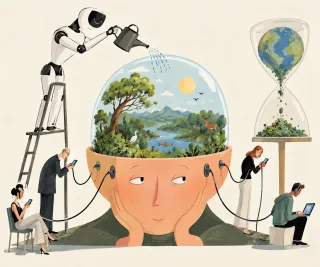
The Neuro Climate Working Group integrates Planetary Health principles by advancing transdisciplinary research, education, and policy translation at the intersection of environmental change, ecosystem health, and brain and mental health across the lifespan. We apply systems thinking and equity-centered approaches to understand how climate and environmental stressors affect cognitive, neurological, and mental resilience, particularly in climate-vulnerable communities. Through collaboration with the Planetary Health Alliance, we aim to co-develop shared educational resources, webinars, and policy-relevant outputs that elevate brain health as a core outcome of Planetary Health. We are committed to active knowledge exchange, partnership, and collective action that strengthen planetary systems while safeguarding brain health and mental well-being.
Texas Tech University Health Sciences Center El Paso
University/Academic Institution
Texas Tech University Health Sciences Center El Paso
Year Joined: 2025 · United States
Texas Tech University Health Sciences Center El Paso integrates Planetary Health principles across education, research, and community engagement to strengthen the connection between environmental sustainability and human well-being. Through our Global Health Distinction Track, electives, and international partnerships, we prepare future healthcare professionals to understand how ecological systems influence health outcomes. As a border institution, we are expanding our focus beyond community and global health to include the health of the environments that sustain the populations we serve. By joining the Planetary Health Alliance, we aim to collaborate with member institutions to share knowledge, develop educational resources, and advance initiatives that promote the health of both people and the planet.
Earth-Riders is an independent, international, non-profit and non governmental association that brings together equestrians, the schools in their communities, public water protection agencies, and the sustainability organizations to promote refreshed and regenerative landscapes all around us. Our mission is to offer training and advocacy of the tradition of composting, and applying fresh soils to replace reliance on chemical and increasing flammable and thirsty vegetation, and restore the everyday actions that feed and nurture urban and suburban ecosystems. By integrating Planetary Health principles into our training, we aim to empower next generation students and future leaders with the culture and tools to protect landscapes and build sustainable community ecosystems. As a member of the Planetary Health Alliance, we look forward to collaborating with the Global Community, amplifying the voices of the powerful equestrian demographic, and advancing initiatives that improve the quality of life and landscapes of the future for us all.
The Global Commons Alliance (GCA) is committed to advancing the principles of Planetary Health by working to safeguard and restore Earth’s life-support systems — the global commons that underpin both planetary stability and human wellbeing.
As a member of the Planetary Health community, the GCA seeks to facilitate collaboration across disciplines and sectors — from science and policy to finance, civil society, and business — to translate scientific insight on safe and just Earth system boundaries into equitable, systemic change.
The Brain Climate Equity Collaborative (Brain-CE Collab) is a Canadian non-profit dedicated to addressing the profound impacts of climate change and environmental degradation on brain and mental health, with an unwavering focus on equity-deserving populations. Our work integrates Planetary Health through four core pillars: generating evidence on climate-neurology links, raising public and clinical awareness, driving systemic policy change, and fostering community-informed innovation. We aim to collaborate with the Planetary Health Alliance community by sharing our specialized brain-health lens, contributing to educational resources, and partnering on transdisciplinary research and advocacy to ensure that brain health is a central component of the global planetary health agenda.
The Educated Choices Program advances Planetary Health by providing free, science-based education that helps young people understand how food choices influence human health, climate stability, biodiversity, and the well-being of communities worldwide. Our global presentations and educator resources integrate current research on food systems and environmental impacts, empowering students to make informed decisions that support both personal and planetary well-being. As a member of the Planetary Health Alliance, we are committed to sharing insights from our large-scale youth education initiatives, collaborating with fellow members to strengthen evidence-based Planetary Health education, and expanding access to high-quality learning resources across diverse regions. We look forward to building partnerships that amplify youth engagement, accelerate knowledge exchange, and support collective action for a healthier future for people and the planet.
Health Equity and Systems Transformation Portfolio, Cumming School of Medicine, University of Calgary
University/Academic Institution
Health Equity and Systems Transformation Portfolio, Cumming School of Medicine, University of Calgary
Year Joined: 2025 · Canada
The University of Calgary’s Planeary Health hub, which is embedded in the Cumming School of Medicine’s Health Equity and Systems Transformation portfolio, has the mission to to embed the principles of Planetary Health and Sustainable Healthcare into all of the key activities of the Cumming School of Medicine: clinical care, education, scholarship, and community outreach. We also commit to ensuring we meet the key performance indicators of the AFMC Declaration on Planetary Health. We commit to partnering with the Planetary Health Alliance and its members to share resources, learnings and expertise in service of the overall PHA mission.
The Global Climate and Health Alliance (GCHA) integrates Planetary Health as one of its core concepts, recognizing that protecting human health is inseparable from safeguarding the health of our planet. Through evidence-based advocacy, research, movement building, and communications, we work with 225+ member organizations in over 125 countries to address the climate crisis as a fundamental health challenge.
University of Wisconsin-Madison Osher Center for Integrative Health
University/Academic Institution
University of Wisconsin-Madison Osher Center for Integrative Health
Year Joined: 2025 · United States
As the Osher Center for Integrative Health at the UW-Madison, we continue to provide high quality care to the individuals we serve in our health system and to partner with our specialist colleagues across our organization to expand access to integrative health care. We also have an increased capacity to partner with non-healthcare entities within our University and our community to explore innovative ways to not just treat disease, but to truly understand and help nurture the origins of health in all those we serve. We strive to be leaders in this next phase of the field of Integrative Health—Salutogenic Science. To do this well will require a greater recognition of the impacts of social determinants of health and pervasive barriers to healing such as systemic racism and climate change. We will also continue to raise our awareness and reconcile aspects of the Integrative Health field that are guilty of significant cultural appropriation in order to respect and honor healing traditions from which we have much to learn.
While there is much work to do, we move forward using the same principles that integrative health practitioners use to support healing in individuals—listening deeply first, seeking to understand common goals and then reflecting on how we can best be of service to support health and healing. We look for innovative paths to stimulate the inherent healing response within individuals and the incredible healing potential that arises when the best of our academic institution and communities work together for the well-being of all.
In losing the cryosphere (the frozen parts of the Earth’s surface), we lose the Arctic sea ice, an essential planetary climate operating system that connects with all of the other components of the Earth’s climate systems. Together we can protect our planetary health.
At PEL, we work at the intersection of food, climate, and health to promote the Planetary Health Diet—an evidence-based approach emphasizing plant-forward, sustainable nutrition. We collaborate with NGOs, healthcare professionals, and ministries of health in low- and middle-income countries to educate communities, prevent diet-related disease, and implement food-as-medicine programs. Our goal is to improve medical outcomes while reducing the environmental impact of current food systems. We look forward to collaborating with the Planetary Health Alliance to advance these shared goals and build a healthier, more sustainable future for all.
Xheladin and Xhufe Morina Foundation/Environmental Neuroscience Research Incubator
Non-Profit Organization
Xheladin and Xhufe Morina Foundation/Environmental Neuroscience Research Incubator
Year Joined: 2025 · United States
The Xheladin & Xhufe Morina Foundation (XHMF) and its Environmental Neuroscience Research Incubator (ENRI) advance planetary health by exploring how environmental stressors affect brain health, learning, and community well-being. We design and deliver science education programs, community monitoring projects, and data-driven tools that make the links between environmental conditions and mental health tangible for underserved communities. Through collaboration with the Planetary Health Alliance, we aim to share our community-engaged research models, learn from global peers, and contribute context-specific insights from the Balkans to the wider planetary health dialogue. Together, we hope to co-create scalable, youth-focused solutions that empower communities to build resilience and protect both human and planetary health.
Vegan International plans to advance Planetary Health by participating in UN Conferences to network and educate participants regarding the detriments to humans, other species, nature and the planet of Speciesism. Currently Vegan International is promoting a United Nations Convention Against Speciesism which would follow the UN Conventions Against Genocide, Torture, Eliminate Discrimination Against Women, and Rights of the Child. This would give Rights to all Species, and Nature.
FCCA and PHA are committed to integrating the clinician’s voice and planetary health into all our educational, advocacy, and community outreach efforts. Our collaboration will expand awareness and understanding of the health impacts of climate change, increase research opportunities, and improve dissemination of relevant findings, as we amplify advocacy for equitable climate and health solutions to drive meaningful action.
The Maryland Forestry Foundation pledges to collaborate with the Alliance to share and expand its programs to expand forest cover on private lands and provide learning experiences for high school studentsnts to consider careers in natural resources and urban forestry. Further, we will incorporate examples of the alliance’s work in our statewide monthly webinar series and, to the extent possible, draw on members as a resource for our education and outreach training for local volunteers. We already draw heavily on science to describe the ecological service benefits of forest cover for both landowners and citizens as incentivizes for good stewardship.
The Oath for Sustainability Network is a youth-led organization promoting transdisciplinary collaborative efforts for planetary action in low-income settings. We advance planetary health by integrating it with our work in community organizing and climate and health research. Our broader aim as members of the planetary health community is to collaborate with field experts for resources sharing and translation of research to practice in our education and advocacy projects.
MEDICC promotes US-Cuba health collaboration and highlights Cuba’s public health approaches to inform the quest for health equity and universal health worldwide. MEDICC offers Planetary Health focused trips to Cuba to learn about Cuba’s exceptional disaster preparedness planning and an ambitious national climate change plan called Tarea Vida. MEDICC can facilitate research relationships between Cuba and other nations to promote Planetary Health solutions.