
Mental Health Noncommunicable Diseases
• Research & Reports
What Is Planetary Health?
Our environment shapes neurological function and mental well-being, while resilient brains empower societies to adapt to and mitigate planetary challenges.
1 in 4 dementia deaths worldwide, approximately 626,000 deaths each year, is attributable to air pollution.
Brain health sits at the heart of Planetary Health, reflecting the dynamic relationship between human biology, social systems, and the environments we depend on to survive and thrive. The brain, our organ of cognition, emotion, behavior, and social connection, is uniquely sensitive to environmental conditions shaped by how we steward the planet. Rising temperatures, air and water pollution, extreme weather events, food and water insecurity, ecosystem degradation, and exposure to environmental toxins all affect neurological function, cognitive performance, and mental health across the lifespan.
20-30 minutes in natural environments can significantly improve attention, working memory, and executive function, compared with urban settings.
At the same time, healthy brains enable learning, creativity, cooperation, and collective decision-making, capacities that societies need to adapt to environmental change, design sustainable systems, and respond to crises. When environmental degradation undermines brain health, it weakens individual well-being, social cohesion, productivity, and communities’ ability to respond effectively to planetary challenges. This makes brain health both a vulnerability and a leverage point within the Planetary Health framework.
Scientific evidence increasingly shows that environmental stressors act on the brain through interconnected biological, psychological, and social pathways. Heat stress disrupts sleep, cognition, and mental health; air pollution accelerates cognitive decline and increases the risk of dementia and neurodevelopmental disorders; extreme weather events drive trauma, displacement, and long-lasting effects on mental and cognitive health. These risks are not evenly distributed. Children, older adults, people with pre-existing neurological or mental health conditions, and communities facing socioeconomic disadvantage bear a disproportionate burden. A Planetary Health approach therefore requires centering on equity, prevention, and resilience.
Crucially, many Planetary Health solutions are also brain-protective solutions. Cleaner air, climate-resilient food systems, access to green and blue spaces, urban tree canopies, reduced noise and heat exposure, and stronger social infrastructure all support cognitive function, emotional well-being, and neurological health while delivering environmental co-benefits. By explicitly integrating brain health into Planetary Health research, policy, and practice, we can better capture the full human benefits of environmental action and design interventions that strengthen both people and planet.
Mental Health Noncommunicable Diseases
• Research & Reports

Mental Health Youth Voices
• News

Mental Health Noncommunicable Diseases
• Research & Reports

Civil Society
The biggest legal claim ever brought in the UK over environmental pollution in the country has been filed at the High Court. Almost 4,000 people have signed up to the lawsuit against major poultry producers and a water company over allegations of “extensive and widespread pollution” in three rivers – the Wye, Lugg and Usk. They argue the state of the rivers in recent years has severely affected local businesses, property values and people’s enjoyment of the area, and are seeking “substantial damages”. The firms being sued – Avara Foods Limited, Freemans of Newent Limited and Welsh Water – all...
• News
Biodiversity Loss Chemical Pollution
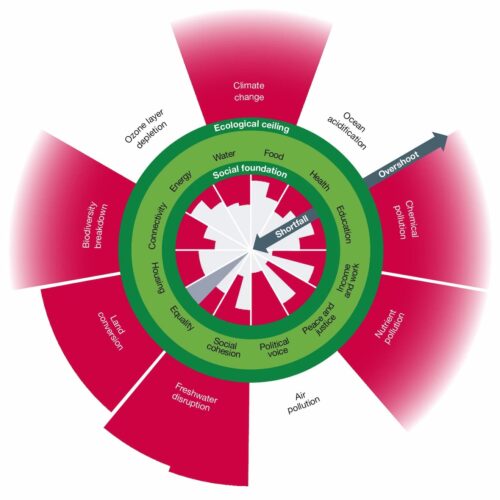
A reimagined doughnut economics framework shows that over the past two decades, progress in meeting people’s basic needs has been slow, while environmental pressures continue to rise. The richest countries are responsible for over 40% of environmental impacts, while the poorest face more than 60% of social shortfalls, emphasizing the need for equitable economies that care for people and planet.
• Research & Reports

Climate Change Food Systems
The EAT-Lancet Commission presents new evidence on nutrition and health within safe and just planetary boundaries, including updates to the Planetary Health Diet, assessments of food systems’ impacts on the Earth system, and action-oriented recommendations.
• Foundational Documents, Research & Reports

Climate Change Governance and Policy
At Climate Week NYC, officials from the United Kingdom and Chile promoted ocean-based actions to lower greenhouse gas emissions. Some of the mitigation steps under consideration include a phaseout of offshore oil and gas drilling, efforts to decarbonize shipping, investments in offshore wind and other renewable energy, and commitments to enhance sustainable fisheries and conservation of marine ecosystems.
• News

Public Sector Communications
In this brief, former Bloomberg Public Innovation Fellow Terrance Smith explores the critical role of trust in public sector innovation.
• Guides & Frameworks, Research & Reports
