The Planetary Health South & Southeast Asia Regional Hub serves as a nexus point for coordinating Planetary Health programs, initiatives, and projects across the region. The Hub serves as a central coordinating body that helps facilitate Regional collaboration, capacity building, and policy support.
The Sunway Centre for Planetary Health strengthens media capacity through workshops (2025–2028), enhancing engagement, trust, and knowledge for planetary health reporting in the Asia-Pacific.
The Hub is actively working on developing and implementing new initiatives to advance Planetary Health in South & Southeast Asia. Come back in the future to learn about new projects!
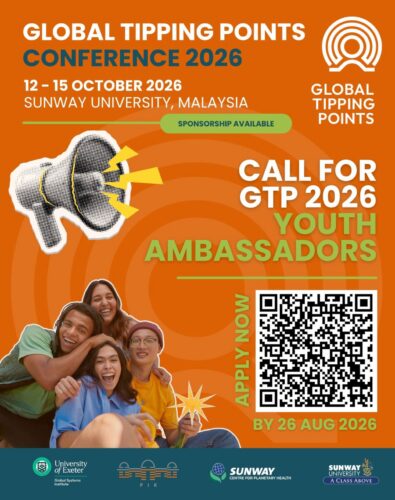
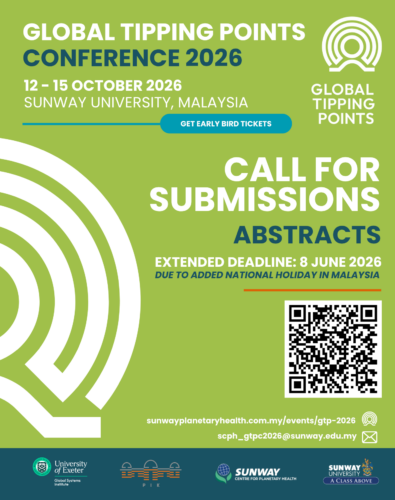
Global Tipping Points Conference 2026: Abstracts Submission
Building on the transformative insights of the Global Tipping Points Report 2025, this conference accelerates scientific understanding of critical thresholds that will determine our collective future. GTP 2026 focuses on Understanding the Shift, Igniting Imagination, and Accelerating Action across planetary boundaries.
We invite submissions advancing scientific understanding across Earth System Science, Technology and AI, Governance, Finance and Business, Faith and Culture, Communications, Nature-based Solutions, and Health. Topics focusing on Asian contexts where solutions are emerging at scale are particularly encouraged.
Join us to explore innovative approaches to conserving biodiversity and protecting wildlife, highlighting regional efforts that bridge science, policy, and community action for a more sustainable and harmonious planet.
Regional Funding Call 2025: Closing the Gaps in Climate Change and Health Research in South and Southeast Asia
Monash University Malaysia, Sunway Centre for Planetary Health, and The Maldives National University
The Regional Hub for Asia Climate Change and Health invites researchers in South and Southeast Asia to apply for funding to strengthen regional collaboration and advance evidence-based solutions to climate-related health challenges.
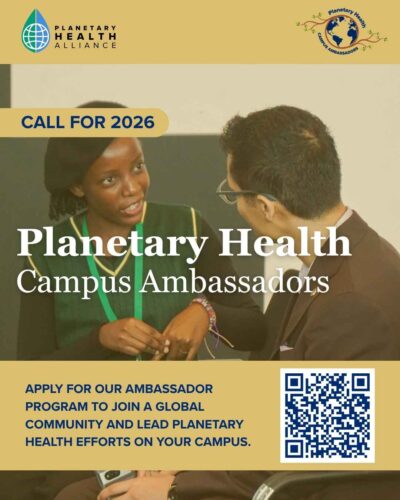
Apply for our Planetary Health Campus Ambassador Program formally recognizing Next Generation leaders in Planetary Health on academic campuses and within the global community. The Planetary Health Alliance is seeking 50 university students worldwide to take on leadership roles on their campuses and beyond.
Road to COP 30: Elevating Health in Southeast Asia’s Climate Ambition
This online dialogue, hosted by Health Care Without Harm Southeast Asia with Sunway Centre for Planetary Health and CANSEA, will spotlight how Southeast Asian countries are integrating health into climate commitments. Through country sharing, panel discussions, and facility-level insights, the event seeks to elevate health as a central pillar of regional climate ambition ahead of COP30 in Belém, Brazil
Crossroads in Global Health: Rising Temperatures, Rising Stress – Expanding Mental Health Access in Climate Emergencies
Please join Project HOPE for our next global health webinar. In this session, we will learn how we can better support those deeply impacted by the climate crisis, hear from experts and frontline workers as they discuss the challenges in accessing Mental Heath and Psychosocial Support faced by communities in climate vulnerable environments, share effective strategies for fostering resilience, and highlight ways organizations and policymakers can prioritize mental well-being in the face of climate disasters.
Register here to join us!

Generasi Edukasi Nanggroe Aceh (GEN-A) advances Planetary Health by empowering communities through accessible, evidence-based health education that emphasizes the interdependence between human health and environmental conditions. As a youth-led organization, we leverage community engagement, digital innovation, and capacity-building initiatives to foster preventive behaviors and strengthen health literacy at the grassroots level. GEN-A is committed to collaborating with the Planetary Health Alliance by contributing community-driven perspectives, co-developing impactful education and outreach strategies, and actively engaging in global knowledge exchange. Through this collaboration, we aim to expand the reach of Planetary Health initiatives and collectively drive meaningful, sustainable change across diverse communities.
Minhaj University Lahore (MUL) is committed to advancing planetary health through its interdisciplinary educational programs, research initiatives, and community engagement. The university integrates sustainable practices, climate change solutions, and public health into its core activities, ensuring that students are equipped with the knowledge and tools necessary to address the global challenges of environmental degradation and public health crises.
Through its SDGs Hub, Centre of Research and Innovation in Maritime Affairs (CRIMA), Centre for Economic Planning and Development (CEPD), and degree programs such as BS in Environmental Sciences, Botany, Zoology, Nutrition & Dietetics, and Food Technology, MUL works towards achieving the Sustainable Development Goals (SDGs), particularly SDG 13 (Climate Action), SDG 3 (Good Health and Well-being), and SDG 6 (Clean Water and Sanitation). These programs equip students with the knowledge to understand the complex interconnections between human health and the environment, particularly through the study of biodiversity, food security, climate change, and sustainable health systems.
MUL has also developed green campus initiatives, such as technological solutions for sustainability and tree plantation campaigns, that aim to reduce its environmental footprint while promoting sustainable living. Minhaj University Lahore hosted a comprehensive series of progressive and dynamic activities, events, and conferences under its Climate Change initiative, thoughtfully examining the multifaceted impacts of climate change on human health while advancing sustainable, research-driven, and innovative strategies to safeguard planetary health.
MUL aims to collaborate with PHA members to:
• Enhance planetary health research by participating in global research projects that focus on climate adaptation, sustainable water management, food security, and public health.
• Share knowledge and best practices for sustainable urban planning, marine sustainability, sustainable food systems, and health promotion through departments like Botany, Zoology, Nutrition & Dietetics, and Food Technology.
• Advocate for global solutions to the health impacts of environmental degradation and climate change, while working on policy development to create a healthier planet.
By joining the Planetary Health Alliance, MUL seeks to strengthen its role as a leader in planetary health research and sustainability education, contributing to global efforts that address the interconnected challenges of environmental health and sustainable development. MUL’s active participation in PHA initiatives will further expand its commitment to creating a more sustainable and healthier world for future generations.
In partnership with PHA, MUL’s Centre for Environmental Change will become a critical player in global planetary health efforts, focusing on climate change, pollution, biodiversity loss, and sustainable policies that promote human health and environmental protection.
Basic Foundation is a national not-for-profit organization based in New Delhi, India, committed to integrating Planetary Health principles into its work by addressing environmental determinants of health, particularly the severe impact of air pollution on respiratory and non-communicable diseases. Through community awareness, early screening, patient support, and advocacy initiatives, the organization works to improve health outcomes while promoting cleaner and healthier environments in one of the world’s most polluted urban settings.
As a member of the Planetary Health Alliance, Basic Foundation seeks to collaborate closely with the global Planetary Health community to address urgent air quality and climate-related health challenges. The organization aims to exchange knowledge, adopt best practices, and contribute its on-ground experience to advance equitable, sustainable, and community-driven health solutions.
Eco Circular India Foundation integrates Planetary Health principles through community-driven initiatives in afforestation, water conservation, sustainable agriculture, sanitation, and model village development, recognizing the interdependence of ecosystem health and human well-being. Our work focuses on building climate-resilient communities while improving livelihoods, public health, and environmental outcomes.
We aim to collaborate with the Planetary Health Alliance community by sharing scalable, field-tested models from India and engaging in knowledge exchange and interdisciplinary partnerships. Through this collaboration, we seek to co-develop solutions that bridge local action with global impact and advance the Planetary Health agenda.
Our organization integrates Planetary Health principles into its work by promoting evidence-based Lifestyle Medicine approaches that recognize the interdependence of human health, environmental sustainability, and social systems. We emphasize prevention-focused care, sustainable nutrition, physical activity, and low-carbon health practices across clinical services, education, and policy engagement. Through collaboration with the Planetary Health community and PALM, we aim to align research, advocacy, and capacity-building efforts to advance resilient health systems. We look forward to contributing expertise while learning from global and regional partners to accelerate action at the intersection of health and the environment
Institute of Planetary Survival for Sustainable Well-being
Research Institute
Institute of Planetary Survival for Sustainable Well-being
Year Joined: 2026 · Malaysia
The Institute of Planetary Survival for Sustainable Well-being (PLANETIIUM), IIUM, integrates Planetary Health principles into its work by addressing the interconnected challenges of biodiversity, food security, climate change, and human health. Through initiatives in these four pillars, we promote holistic well-being for both people and the planet. By joining the Planetary Health Alliance, we aim to collaborate with global members through knowledge exchange, joint research projects, and interdisciplinary mentorship. We look forward to contributing our expertise and learning from the Alliance community to advance evidence-based solutions for planetary health.
The ASEAN Institute for Health Development (AIHD), Mahidol University, incorporates Planetary Health into its research, education, and policy engagement by addressing the health impacts of climate change, environmental degradation, and cumulative environmental exposures in Southeast Asia. AIHD advances systems-based and applied approaches, including environmental risk management, nature-based solutions, and environmental surveillance, to generate co-benefits for human and ecosystem health. Through the Planetary Health Alliance, AIHD seeks to collaborate with global partners to share regionally grounded evidence, co-develop interdisciplinary research, and strengthen capacity building in exposure-intensive and low- and middle-income settings. AIHD is committed to contributing Southeast Asian perspectives to collective advocacy and to translating Planetary Health knowledge into actionable, policy-relevant solutions.
The School of Medicine at Perdana University integrates Planetary Health principles across its medical and public health education, research, and community engagement by explicitly addressing the links between environmental change, climate risks, and human health. The School advances Planetary Health through interdisciplinary teaching, applied research on climate- and environment-related health challenges, and policy-oriented scholarship relevant to Malaysia and the ASEAN region. As a member of the Planetary Health Alliance, the School seeks to collaborate with global partners on curriculum co-development, multi-country research, and capacity-building initiatives, particularly in low- and middle-income settings. Through active participation in Alliance working groups and regional networks, the School aims to contribute Southeast Asian perspectives, strengthen evidence-informed policy engagement, and support the collective advancement of Planetary Health worldwide.
Banka Earth Foundation is committed to advancing planetary health by ensuring environmentally-friendly and socially-impactful water, sanitation and hygiene (WaSH) solutions; in partnership with other organizations.
Bangladesh is among the top ten countries most affected by climate change. We are seeking collaboration in the areas of education, research, access to finance, and technology transfer related to climate and health. We are also open to exploring other forms of partnership.
Myanmar Community Health Society (MCHS) is committed to advancing Planetary Health with the belief that human health cannot be promoted by public health programs or professionals alone, and it requires diverse actors including those who recognize the interconnected well-being of humans, animals, and the environment. Through our programs in WASH, maternal and child health, humanitarian aid, and inclusive education, we apply a One Health approach to guide staff and volunteers in understanding interlinked issues and potential health threats within our target communities. We aim to collaborate with the Planetary Health community by sharing local insights, co-developing simplified and practical solutions at the community level, and mobilizing resources that strengthen resilience at the grassroots.
Bangladesh Institute of Innovative Health Research
Non-Profit Organization
Bangladesh Institute of Innovative Health Research
Year Joined: 2025 · Bangladesh
The Bangladesh Institute of Innovative Health Research (BIIHR) is committed to advancing evidence-based solutions at the intersection of health, environment, and equity. Through research, capacity building, and policy engagement, we address pressing challenges such as climate change, food insecurity, and the rising burden of chronic diseases in Bangladesh and other low- and middle-income contexts. By joining the Planetary Health Alliance, we aim to contribute locally generated knowledge to the global community, foster South-South collaborations, and integrate planetary health frameworks into education and practice. We look forward to collaborating with Alliance members to strengthen resilience, promote sustainability, and secure a healthier future for people and the planet.
Pakistan Physiological Society – Student Chapter (PPS-SC)
Non-Profit Organization
Pakistan Physiological Society – Student Chapter (PPS-SC)
Year Joined: 2025 · Pakistan
The Pakistan Physiological Society – Student Chapter (PPS-SC) is a national, student-led initiative that empowers future healthcare leaders through education, research, and innovation. We incorporate Planetary Health into our work by organizing seminars and research projects that explore the connections between environmental change and human health, conducting community outreach on climate-related health challenges, and equipping students with future-ready skills in sustainability and entrepreneurship. As members of the Planetary Health Alliance, we aim to collaborate with global partners to share context-specific insights from Pakistan, co-develop educational resources, and participate in joint research and advocacy initiatives. Together, we strive to advance solutions that address the intertwined health of people and the planet.
Global Indigenous and Traditional Medicine Alliance (GITMA)
Non-Profit Organization
Global Indigenous and Traditional Medicine Alliance (GITMA)
Year Joined: 2025 · India
The Global Indigenous & Traditional Medicine Alliance (GITMA) integrates Planetary Health at its core by uplifting Indigenous and traditional healing systems that have long championed the interconnectedness of human and environmental well-being. We recognize that environmental degradation directly threatens the survival of ancestral knowledge, biodiversity, and community health. Through GITMA, we aim to foster mutual learning, co-create solutions rooted in cultural wisdom, and amplify Indigenous leadership in global health and climate discourse. We look forward to active collaboration with the Planetary Health community to ensure that Indigenous voices, values, and practices shape a healthier, more resilient future for all.
Sukher Swarga Foundation is committed to advancing Planetary Health through our work in mangrove conservation, environmental education, and community development in the Sundarbans region. We incorporate Planetary Health principles into our initiatives, recognizing the intricate relationships between human health, environmental conservation, and sustainable livelihoods. By joining the Planetary Health Alliance, we aim to collaborate with like-minded organizations, share knowledge and best practices, and amplify our impact in promoting a healthier, more sustainable planet. We look forward to working together to address pressing Planetary Health challenges and promote a more resilient future.
EcoServe Development Foundation is dedicated to advancing Planetary Health by fostering a holistic approach that links environmental sustainability with human well-being. Through our innovative, community-driven initiatives, we work to restore ecosystems, promote sustainable livelihoods, and advocate for policies that support both environmental protection and public health. As a member of the Planetary Health Alliance, we aim to collaborate with the global community to exchange knowledge, drive impactful advocacy, and strengthen collective efforts to build a healthier, more sustainable future for all.
The SingHealth Duke-NUS Global Health Institute (SDGH) is committed to advancing planetary health through education, research, policy advocacy, and innovation across Asia and beyond. The SDGHI Planetary Health Initiative will tackle the interlinked crises of climate change, environmental pollution, and biodiversity loss by building resilient health systems and catalysing cross-sectoral action. As a member of the Planetary Health Alliance, we aim to contribute regional and global leadership, co-create lasting solutions, and champion an integrated, equity-driven approach to protecting the health of people and the planet.
Youth in Public Health is a youth-led organization committed to advancing planetary health through education, innovation, and community empowerment in Indonesia. We integrate the principles of planetary health into our programs: Zero Stunting, GROW, Healthy Teens, and Research Group by addressing the intersections of human health, nutrition, and sustainable planetary health. Through our membership in the Planetary Health Alliance, we aim to collaborate with global partners to strengthen youth engagement, share research, and co-develop scalable solutions for healthier people and a healthier planet.
Medical Lab. Technologists Association of Pakistan (MLTAP)
Non-Profit Organization
Medical Lab. Technologists Association of Pakistan (MLTAP)
Year Joined: 2025 · Pakistan
We want to collaborate with Planetary Health principles to enhance our educational and professional development programs. This includes hosting workshops, webinars, seminars, hands on training and community forums that focus on the interconnectedness of human and environmental health, climate resilience, and sustainable development. By engaging students, professionals, and local leaders, we aim to foster a new generation of Planetary Health advocates equipped with interdisciplinary knowledge and practical tools.
Family physicians consider it one of their core tasks to maintain and improve their patients’ health in a comprehensive sense, which includes Planetary Health and the sustainability of our planet. Family physicians, having access to most of the population, can increase our population’s awareness of problems which threaten both individual health and the planet, promote behaviour changes, and empower individuals to live a healthier and more sustainable lifestyle. HKCFP is committed to advancing and sharing knowledge of the fundamental scientific and social processes that sustain our lives and our planet.
Universiti Teknologi Malaysia (UTM) is dedicated to embedding sustainability into its institutional DNA, as articulated in our Sustainability Blueprint 2030. This comprehensive plan outlines strategic initiatives aimed at achieving a Net Zero Carbon Campus and enhancing ecosystem resilience. In alignment with these objectives, UTM is committed to integrating planetary health principles across our education, research, and community engagement activities. We actively seek collaboration with the Planetary Health community to co-develop innovative solutions that address the complex interconnections between human health and environmental sustainability, thereby contributing meaningfully to global sustainable development goals.